
 5 star rated
 Fully Accredited
 60+ years’ experience
 100% customer satisfaction
 Always happy to help

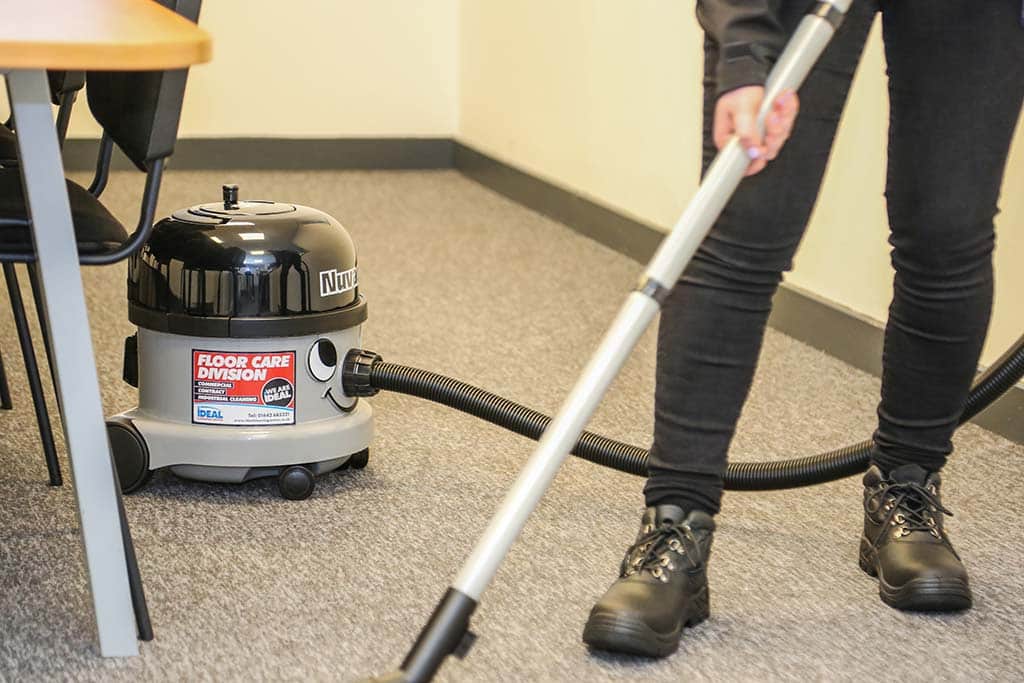
Floors and carpets take more punishment than almost any other surface in a commercial building. Every visitor, delivery, and member of staff walks across them, carrying in dirt, moisture, and debris throughout the day. Over time, this daily wear affects appearance, hygiene, and even the lifespan of the flooring itself.
For businesses across Teesside, knowing how often floors and carpets should be cleaned is not always straightforward. The right schedule depends on footfall, flooring type, and the nature of the premises.
Contact Ideal Cleaning Centre to discuss a commercial floor and carpet cleaning schedule tailored to your business.
Why Cleaning Frequency Matters
Neglected floors and carpets do more than look untidy. Ground-in dirt and grit act like sandpaper underfoot, wearing down fibres and surfaces faster than regular maintenance would allow. Left unchecked, this leads to premature replacement costs and a workplace that feels less professional to staff and visitors alike.
Regular cleaning also supports hygiene and safety, reducing the build-up of bacteria, allergens, and slip hazards that can develop in high-traffic areas.
Factors That Determine How Often You Should Clean
There is no single answer that suits every business. The right frequency depends on a number of factors:
- Footfall – how many people pass through the space each day
- Flooring type – carpet, vinyl, hard floor, or stone
- Nature of the business – retail, office, industrial, or hospitality
- Weather exposure – entrances exposed to rain, mud, or grit
- Whether food or drink is served on site
A quiet back office will need far less attention than a busy retail entrance or a canteen floor.
General Guidelines for Cleaning Frequency
While every premises is different, these general guidelines offer a useful starting point:
- Daily – vacuuming or sweeping high-traffic areas, entrances, and spot-cleaning spills
- Weekly – mopping hard floors and more thorough vacuuming throughout the building
- Monthly – deeper attention to carpets in busier zones, such as reception areas and corridors
- Quarterly – a full professional deep clean of carpets and hard floors across the premises
Businesses with heavy footfall, such as retail units or busy offices, often benefit from more frequent professional cleaning than this baseline suggests.
Signs Your Floors and Carpets Need Attention Sooner
Between scheduled cleans, it is worth watching for signs that flooring needs attention ahead of the usual routine:
- Visible stains or discolouration that do not lift with normal cleaning
- Odours developing in carpeted areas
- Dull or scuffed patches on hard floors
- Increased dust or debris build-up around entrances
- Slippery patches on hard flooring
Addressing these issues early helps prevent more significant damage and keeps the premises looking its best.
Why Professional Cleaning Makes the Difference
Day-to-day cleaning keeps things tidy, but professional cleaning reaches what routine maintenance cannot. Specialist equipment and treatments lift deep-set dirt, restore colour and texture to carpets, and remove ingrained grime from hard floors without causing damage.
Professional cleaning also protects the investment made in flooring, helping it last longer and continue to perform well under daily use.
This includes:
- Deep carpet cleaning and stain removal
- Hard floor scrubbing, polishing, and sealing
- Entrance matting and high-traffic zone treatment
- Scheduled maintenance plans tailored to footfall
Final Thoughts
There is no one-size-fits-all answer to how often commercial floors and carpets should be cleaned. Footfall, flooring type, and the nature of the business all play a part in shaping the right schedule. What matters most is staying ahead of wear and dirt rather than reacting to it once it becomes visible.
A well-maintained schedule, combined with regular professional cleaning, helps protect appearance, hygiene, and the long-term condition of your flooring.
Speak to Ideal Cleaning Centre today to arrange a commercial floor and carpet cleaning schedule suited to your premises.